Leading with authenticity: in conversation with Christine Palmer, Group Chief Risk Officer, ANZ
17 Nov 2026
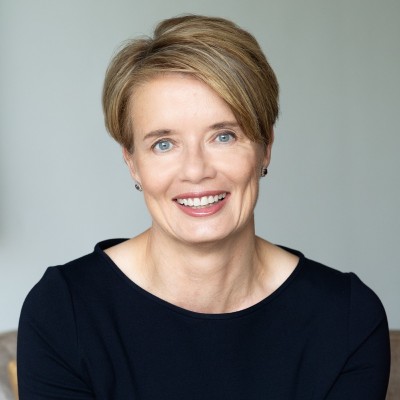
Christine Palmer joined ANZ as Group Chief Risk Officer in December 2025, bringing more than three decades of international experience across enterprise risk management, governance and credit risk. Her career has spanned multiple markets and senior leadership roles in a variety of markets.
In this Q&A, Christine reflects on finding your voice, leading through change and building influence.
What does authentic leadership mean to you?
Authentic leadership starts with aligning what you do each day with your values. It means being transparent, understanding your impact on others and having enough self-awareness to recognise that you will not always have every answer.
For me, authentic leadership isn’t about leading from a script or subject matter playbook. It’s about adapting your approach to the situation without losing sight of who you are. It means knowing what you are good at and can bring to various issues as well as where you have development areas, remaining open to learning, listening to different perspectives and being honest about what you know and what you still need to understand.
How do you lead authentically when an organisation is going through significant change?
During periods of uncertainty, people look to leaders for clarity and consistency. They need to understand why the organisation is changing, where it is going and what the change means for them.
That does not require leaders to pretend they know precisely how everything will unfold. It requires them to be clear about what is known, honest about what is still being worked through and consistent about when people can expect more information. It’s about acknowledging how differently we all experience change – some relish it, some fear it or find it overwhelming. Authentic leaders acknowledge that reality, listen to different perspectives and help their teams understand what the future might look like and also adjust their thinking when the evidence changes. Rest assured, many plans can change so being adaptable and resilient when this happens is key.
How is the changing external environment influencing what organisations need from their leaders?
The external environment is becoming more interconnected. Geopolitical events can amplify risks relating to energy, inflation, cyber security, artificial intelligence and supply chains. AI is creating significant opportunities, while also increasing the speed, scale and sophistication of fraud, financial crime and cyber threats.
That convergence places a premium on leaders who can exercise sound judgement when the path is unclear. Organisations need people who can look beyond a single risk, understand how different pressures interact and help teams make considered choices under uncertainty. It needs us to develop the skills to join the dots.
Risk management is an integral part of running a business well. Its value lies in the quality of challenge and oversight it provides and, ultimately, the quality of decision-making it enables. Done well, Risk should help the business move forward with greater confidence, test alternatives and ‘what if’ options, bring clarity to competing priorities and maintain a focus on sustainable outcomes for customers and the bank.
That same principle applies to leadership more broadly. Our role is not to remove all uncertainty. It is to help people understand the choices available, make the trade-offs visible and create the conditions for better decisions.
What does this mean for women who want to build careers in risk and financial services?
It creates an opportunity to think more broadly about the capabilities that matter.
Technical competence remains essential, but as you become more senior, influence increasingly depends on how you communicate, whether you exercise sound judgement and how effectively you bring others with you. It depends on whether you can make complex issues easier to understand and contribute early enough to improve a decision.
This is particularly relevant in Risk. The most valuable contribution is rarely made after a decision has already been taken. Risk leaders need the confidence to ask fact-based questions early, challenge assumptions and clarify what good looks like, while remaining close enough to the business to understand the context.
Career development does not always need to mean moving directly upwards. A lateral role that develops a new discipline, introduces you to a different market or moves you closer to customers can provide the breadth required for a larger leadership opportunity later and help you build a successful career.
How can someone build influence without feeling as though they are “self-promoting”?
I think about influence as a consistent and credible leadership reputation rather than a personal brand. That reputation is built through repeated actions. Are you reliable and can you be trusted to deliver? Do you exercise sound judgement and explain why you are making a decision or have a certain view? Do you speak up when it matters? Do you help others succeed? Can people trust you to be clear and constructive when the situation becomes difficult?
Key to building influence is investing in relationships long before they need to be drawn on, building trust, credibility and an understanding of what matters to others. Creating a community of people you learn from, contribute to and engage with to broaden your thinking. Those relationships help you understand different perspectives, navigate competing priorities and ultimately build support for ideas and decisions.
These relationships don’t emerge by chance. Seek out people whose judgement you respect and ask for feedback. Seek out people who think differently to you to broaden the diversity of your thinking. Volunteer for work that broadens your experience and build relationships beyond your immediate team and support others in return.
What responsibility do established leaders have to create space for others?
Established leaders have an important role in creating the conditions for others to contribute and succeed. Seek out different perspectives, listen with openness and make sure strong ideas, and the people behind them, are recognised.
This is particularly important in financial services, where better decisions depend on our willingness to consider different experiences, identify risks early and challenge assumptions.
As women progress into more senior positions, we have an opportunity to widen the path for those who follow. Sponsorship, honest feedback and visible advocacy can materially change somebody’s career. Being prepared to take a risk on someone is key – when you reach a senior role, irrespective of gender, someone has probably taken a risk on you earlier in your career and supported you to succeed. You can use that experience and that approach to help others who are building their experience.
What is the one message you would like readers to take away?
Authentic leadership is about knowing yourself, expressing a considered view, adapting as circumstances change and using your influence with purpose.
Know what you stand for. Make your contribution. Keep learning. Bring others with you. That is how trust is built, how better decisions are made and how leadership creates lasting impact.
Connect with Christine on Linkedin